A Moonlight Ride
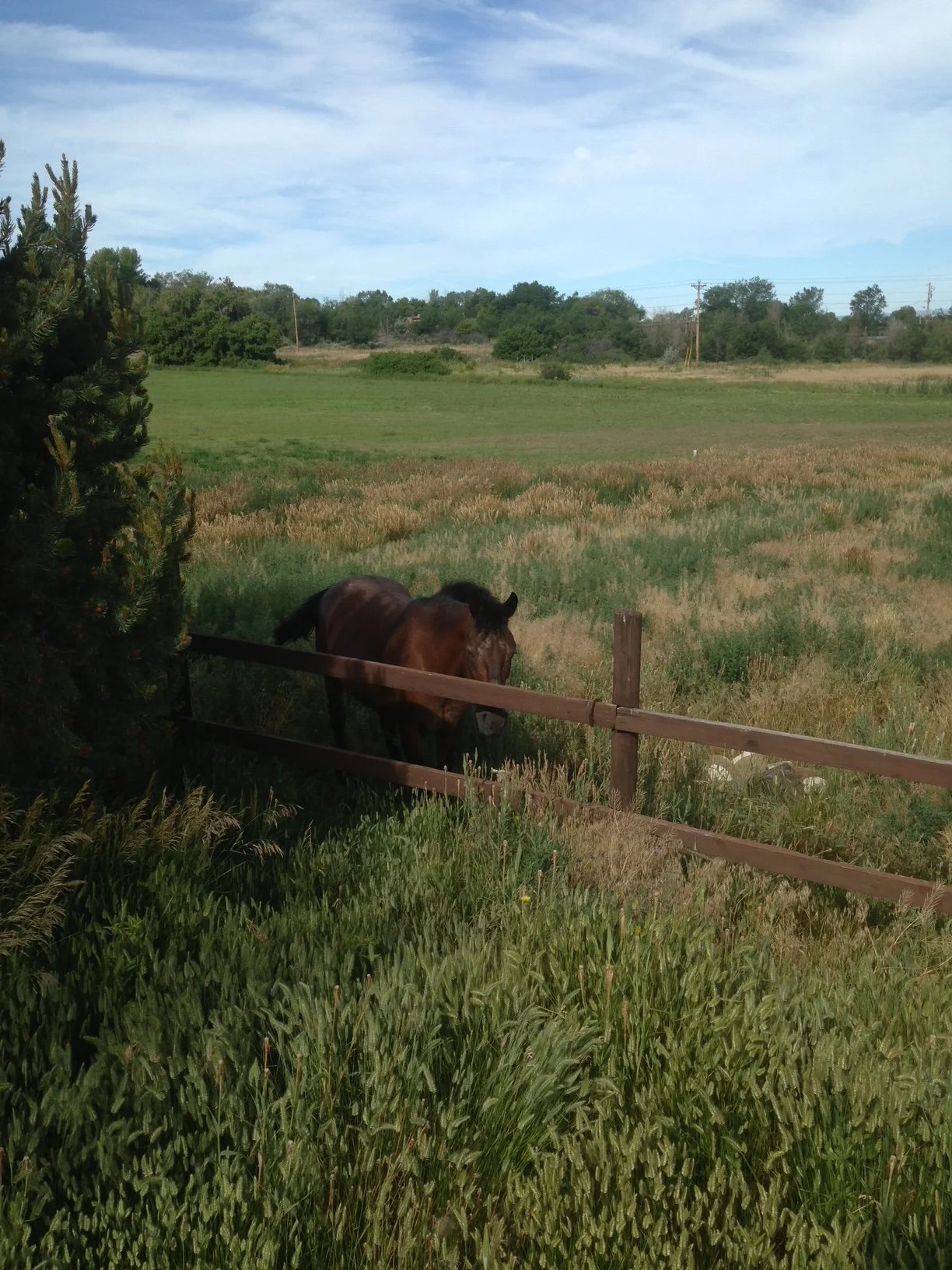
Derek had been told that the horse he was about to mount for the trail ride would stop along the route at every flowering jacaranda tree to sample the blossoms.
“And when Moonlight does that, raise your heel like this and hit him hard in the flank,” Cynthia, the guide, said to him from her saddle, hoisting a tooled boot at a sharp angle and jamming it down just inches from her horse’s side, to illustrate what she meant. “It’s the only way you’ll get him to stop. And to get him moving again, do it again. Same action for stopping and starting.”
Upon receiving her instructions, Derek knew he’d not be able to do that to the horse.
Moonlight would be the first horse Derek had ever ridden. When the animal, brown and white, his hide dulled, was led from his stall and the two were introduced by Cynthia, Derek petted the flat, hard plane of his mane, hot and bony. He was aware that the skin there felt no thicker than paper and that the demarcation between a living animal with a face and one that would someday be reduced to a skull was X-ray thin. Moonlight seemed indifferent to Derek’s touch. And, unreasonably, Derek felt insulted, stung by the horse’s nonchalance. Here Derek was, he felt, showing the horse affection, but with no reciprocity or acknowledgment. Animals aren’t like those in children’s stories he concluded.
But then he thought, how bored Moonlight must be following the same dusty, unchallenging trail every day, carrying a city tourist like himself, who knew nothing about how to ride a horse and wouldn’t be riding another one for years, if ever. The horse’s life was proscribed.
When Derek hitched himself up and slithered onto the saddle, the heat of Moonlight’s flanks seeped through his blue jeans. And as Moonlight wiggled his body, seemingly testing Derek’s tolerance for being able to stay on him, he felt a sensation not unlike mild seasickness. The perch was higher, more precarious than he had expected. He thought, too, if horses had evolved to be even just several inches wider, unable to be straddled by human legs, that they would never have become the animals so important to us. We tamed them as they tamed us.
A brand mark, deeply incised on Moonlight’s rump, depicted a chili pepper, with cartoonish radiating spokes to indicate spiciness—an inkless, carved tattoo, unlike the Rainbow Pride–graffitied arms of Cynthia, as if anyone could mistake her for anything but, as one of her tattoos read, a “Butch Dyke.” Derek considered most tattoos a vandalizing of the body, décor no more appealing than spray paintings on Bronx viaducts, but he was old-fashioned in that way.
When Cynthia saw him run a palm over Moonlight’s mark, reading it like Braille, she called out to him, “Oh, that. Moonlight had quite a past before he came here to live. He even had a different name. After the ride, I’ll tell you more about him, but we gotta start,” she said, acknowledging that everyone in the group was now aligned and ready to begin the ride.
“Okay, people, off we go, stay to the trail, keep your heels down in the stirrups, and if your horse stops to eat something along the way, kick it, like this,” she said mimicking the gesture she had shown Derek. “It doesn’t hurt the way you think. But it’s enough to feel. It’ll get the message across.”
Moonlight began to pick his way along the boulder-lined trail. Derek rocked astride him, and despite what Cynthia had said, he knew he possessed no control over the beast. Moonlight was old and seasoned, still strong, and would do as he wanted. While it wasn’t likely that Moonlight would charge off from the trail out into open desert, Derek remained wary, poised for when Moonlight might rear up or turn the enormous triangle of his mane and nip his leg. Derek perceived a crankiness, a bitterness in the horse, a desire for a spite not yet exorcised.
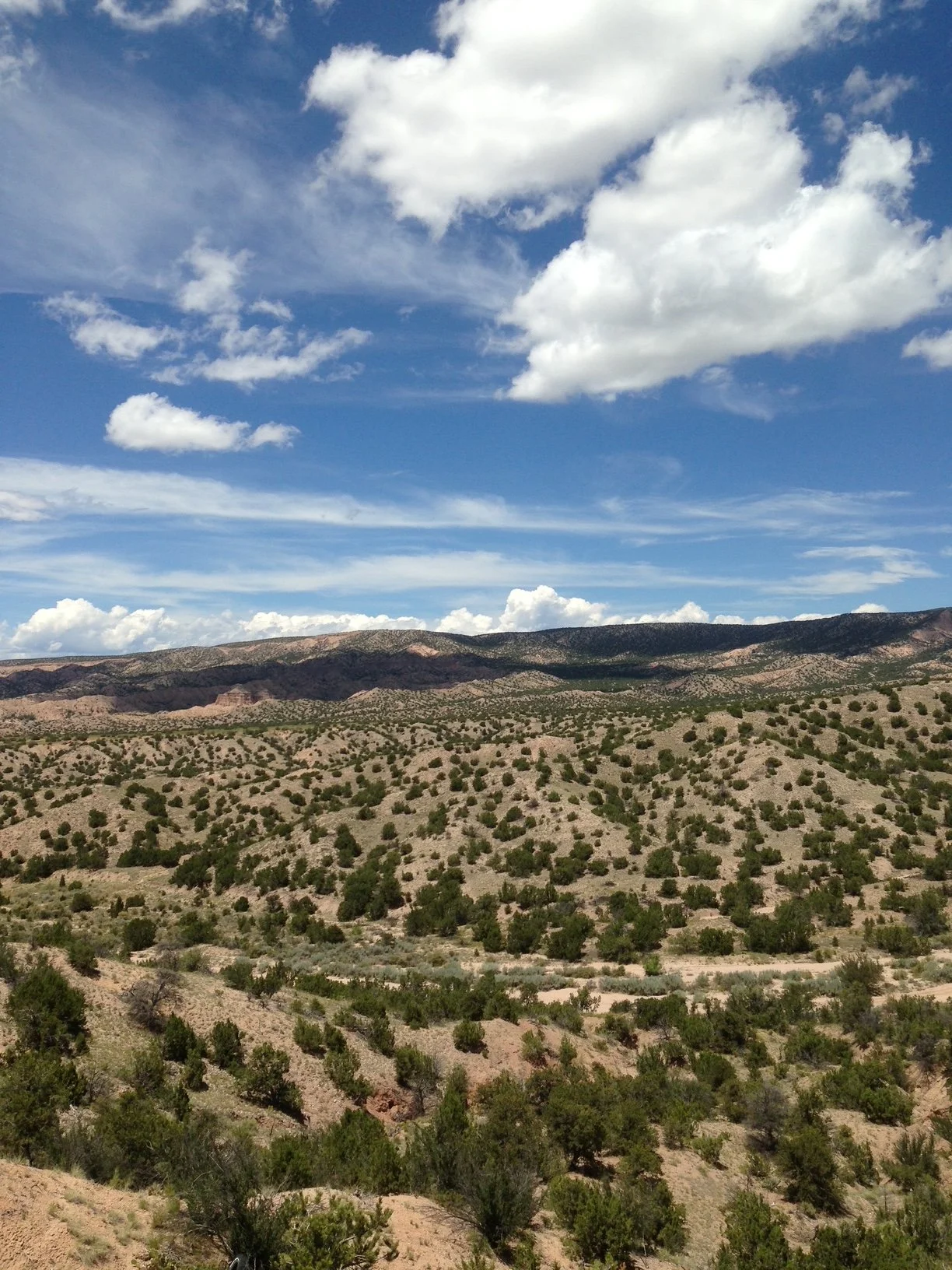
For the days he’d been in Arizona, Derek regarded the desert terrain as monotonous, yet exhilarating in its scale and emptiness. Its beauty lay in what wasn’t there, like Debussy’s declaration that music was the silence between the notes. But because Derek lived in Manhattan and had only been in the desert once before, every oblong pad of prickly pear and saguaro profile he saw along the trail was a novel feature.
The first time he had been to Arizona, he was with his then-partner, Mac—"the-one-who-got-away-from-his-life,” to paraphrase the familiar saying. Together, they had driven through the state to visit ancient rock canyons, those inhabited by indigenous people who had scarred the surfaces with narrative petroglyphs, yet another kind of tattooing, but one with cultural, rather than personal, import. One morning, on an otherwise carless back road through the desert, Mac and he came to a sign that announced the vista before them: The Great Painted Desert.
The information related that the hewn valley before them was the size of the state of Connecticut. As they stood beside their rental car, the motor off but its hood still ticking in the sun, they each visored a hand over their eyes to look into the hazy distance, unable to discern the stated scale of the site. Then, as if they were both simultaneously sharing binoculars and had adjusted the knob to the perfect focus, they saw what they were told they would see. There, indeed, was a fragment of the earth the size of an entire state, its perimeters discernible, the dimensions measurable.
“This is one of those things you see only once,” Mac said. “The conditions, this light, they’re right.”
A few years later, from the roof of their building on 46th Street in Midtown, when they suddenly saw the second airliner go into the other tower, Mac said something similar. “Never again in our life will we see an airplane go into a building.”
Derek still invokes that sighting of the Great Painted Desert, especially in moments of distress or confinement, notably during those two years of the on-again-off-again enforced solitude and proscribed dimensions everyone had to occupy during the pandemic. When he sees in his imagination that valley again, its featurelessness makes him feel free and open. Understand the dimensions of anything, any problem, he surmised, and you can resolve it.
While coursing the trail that Moonlight followed, the horse never looking up at the landscape, Derek was annoyed that much of the route kept skirting the loading zones of the resort buildings and the zippering painted lines of parking lots already ablur in the morning heat. He wanted to be amid limitless desert, riding a horse in the Great American West, when instead he saw obese tourists walrusing their way to the pool like stupid migrating creatures, drawn by speakers emitting mariachi music that competed with the cooings of mourning doves, ice in their jumbo soda cups rattling, snaps of their flip-flops.
Moonlight, meanwhile, clomped along, head down, as if he had followed this route a thousand times—which he might have. He negotiated with nonchalance rocky inclines, ominously edged with the thorns of prickly-pear growth. Moonlight likely felt the tightening of Derek’s legs to his flanks, sensing his rider’s unease and inexperience, the horse’s snorts disdainful. Like someone of a different class who we might meet and with whom we are forced to interact, despite an unease, Moonlight came with a bias against someone like Derek—biases being something everyone and maybe every animal comes with. Moonlight had no interest in wanting to be Derek’s friend.
The moment they entered pure desert, no built entities in sight, Moonlight suddenly stopped—so hard and so fast that Derek slid forward in the mount. Moonlight swung his head and began to eat flowering blossoms from a tree whose branches arched over the trail. The riders behind had to stop; those in front, headed by Cynthia, continued on unaware that Moonlight and his mount had paused.
Cynthia had been in the midst of lecturing about ancient metate that the group would be passing—granite slabs, their mica aglint in early light, where Indian women had ground mesquite pods with such diligence over the centuries that shallow, bowl-like depressions had formed within the stones.
“Whoa,” Cynthia called to her mount when she saw that Derek had stopped. She trotted over.
“Moonlight’s not free to do that. Hit him in the flank. He needs to be taught a lesson. Guess you didn’t hear me before.”
“I heard you before.”
“Then, you need to do as I instructed.”
Derek could feel the peer pressure, his fellow riders impatient to continue on. And he sensed Cynthia’s bias against a well-groomed gay man, paying a lot every night for his suite, going back to Manhattan where the only horses were those pulling carriages through Central Park. Derek lifted a leg and gently dug a boot heel into the horse’s taut flesh. Moonlight registered nothing. He kept eating voraciously, multi-lobed blossoms dissolving into his mouth with no mastication necessary.
“That’s not nearly hard enough,” Cynthia said, admonishing both Derek and Moonlight. “Your boots, such fancy soft suede, they’ll do nothing.”
Cynthia positioned her mount parallel to Moonlight. She jabbed a weathered boot heel deep into the body of Moonlight. He whinnied and threw his head back, a blossom stuck to his wet, flaring nostrils, another obscuring part of his eye, through which he was likely seeing a filtered, violet vista. Derek hoped Moonlight would punish Cynthia with a bite, but he didn’t.
And, then, off they trotted, Moonlight snorting in annoyance. His tongue curled up, reaching the stuck blossom and bringing it into his mouth of yellowed teeth. The other blossom fell off with his movement, he gnashing at the air in an effort to catch it.
Where Cynthia had heeled him, Moonlight’s flank was imprinted with an indentation in the flesh, temporary yet discernible, but beginning to disappear and fill in. His chili-pepper brand, however, stood out in relief in the already-bright sun of early morning. That would never fill in and smooth over.
The group of ten, or so, came to an overlook, elevated enough to take in some terrain. Cynthia had everyone stop.
“Sorry about that delay back there,” Cynthia said to the group. “About Moonlight, the one he’s riding,” she indicated, nodding her head in derision in Derek’s direction, “he’s more difficult than other horses. Every horse comes with a past. When we adopted him, he was so wild his owner branded him with a chili pepper to mark him as untamable. He’s even branded underneath, as if that would have taught him a lesson.”
She saw Derek and others wince in not understanding that latter remark.
“The flesh there is thinner. A brand there, it hurts. Moonlight was fast on his way to the glue factory when we got him. When he first came here, unlike the other horses, he would stay wide awake in the stable, even when outside in the corral. He’d look at the moon, whinnying at it. Like he was talking to it. Having a conversation. We named him Moonlight.”
Derek couldn’t tell if she registered the poetry in what she was saying or in the tale of his naming, or if she was just being matter-of-fact, as a gruff lesbian in control. Derek was once again reminded that the identity alphabet that supposedly spells out gay people does not make them siblings of sorts; the men and women are different beings.
Moonlight continued along the trail, edged by arroyos sculpted smooth as pottery, unimpressed with the story he had heard many times before about himself. Up ahead, though, a full jacaranda appeared like a giant, stilled purple firework, ablaze in the monochromatic earth-toned desert, and Moonlight, knowing what he wanted and wouldn’t let anyone deny him, raised his head and whinnied loudly, anticipating the taste of the sweet, soft petals that would soon be his, and that Derek would allow him to have.